
How to Build a Complete Freezer Stock for a Pakistani Family: A Practical Guide
It is almost the same process for most families in Pakistan where one places a pack of chicken followed by some salan, a few samosas left over from the Ramadan period, and a mysterious bag from somewhere at the back. In a situation where one needs to have something to eat within 20 minutes, the freezer will be stuffed, but the stuff there does not form a meal.
Good organization of the freezer should not revolve around having lots of frozen food but rather having the right variety of proteins, vegetables, breakfast foods, snacks, and accompaniments in the appropriate proportions for your consumption habits.
This manual helps you determine your requirements, the quantities required, the arrangement, and utilization of these items over the span of a typical week, including one day when your uninvited guests come.
1. What Does a Well-Stocked Freezer Actually Mean?
A complete freezer stock is not a fixed shopping list. It is a small set of dependable options that cover your busiest moments: rushed mornings, late evenings, and unplanned guests.
Two families with the same freezer can need completely different stocks. These factors shape yours:
• Size and age of family members. A family with school-aged kids will require easy breakfasts and after-school snacks. Working couples will have their backup plans for dinner.
• Frequency of cooking. Fresh salan and sabzi prepared every day will mean that your freezer is primarily responsible for providing you with breakfast, snacks and emergencies. If cooking is restricted to just a couple of days a week, then it takes up most of the responsibility.
• Breakfast routines. Parathas and chai everyday will require a completely different inventory from families that consume cereal or eggs for breakfast.
• Guests. With frequent visits from family members, your accompaniments and snacks are more important than your proteins.
• Space in the freezer. A compact freezer in the top of the fridge is much less effective than an independent chest freezer. Think of what can be organized and not stuffed in.
• Shopping frequency and budget constraints. Weekly shoppers will have less to store than monthly ones.
Before buying anything, spend a week noting which meals were stressful or which “emergency” foods you reached for. That list is a better starting point than any generic checklist.
2. The Essential Freezer Categories for a Pakistani Family
Think in categories rather than products. Each category solves a different problem.
Breakfast essentials
Breakfast will be the first place for your freezer to show itself. Paratha frozen food can be made in a very short time between the freezer and the tawa, thus making breakfast not dependent on any free time to knead and roll it. Kababs are good to make a fast paratha roll or heated on a pan for additional dishes. These should be stored within easy access because they will be used most frequently.
Everyday meal proteins
Chicken and beef form the basis of most Pakistani cuisine prepared at home, so they should be at the heart of your stock. They are valuable for planning purposes; since on days when you are not sure what to prepare, the mere presence of cut or sliced chicken and beef in your freezer allows you to go straight to the preparation stage. Keep only the types that you use the most often. If your family prepares chicken karahi, curry, and biryani, stock for those.
Vegetables
Frozen veggies come in handy only in case they help you save the effort spent on preparing the meal. Frozen mixed veggies can be used for pulao or fast sabzi, frozen peas can be added to keema matar or to rice, etc. They can be helpful mostly on busy weekdays and for those people for whom peeling and cutting is the most difficult part of cooking.
Tea-time and snack items
Samosas, rolls, and kababs cater to the 5 o’clock hour where kids are hungry and people would like to eat something along with their tea. These items make up the bulk of your host stock (refer section 5). Make sure that you do not buy too much, as snacks are prone to being forgotten.
Accompaniments Chutney and dips may seem insignificant in size, but without them, the whole dish looks incomplete. A frozen paratha with some chutney is an entirely new experience than just a frozen paratha, and samosas and kababs go much better when dipped in something. Always make sure that you have some accompaniment for your snacks.
3. How Much Frozen Food Should a Family Keep?
There is no correct universal quantity, and anyone who gives you one is guessing. What works is estimating your own needs in a few steps:
1. Calculate the number of meals you require the freezer to hold. For instance, three breakfasts, two dinners, and several snack times each week.
2. Multiply this number by the number of family members eating. Be aware of the amount of portions that one package provides to your family. The size of packs varies.
3. Consider your shopping frequency. If you go shopping on a weekly basis, you should have around a week or two worth of meals stored in the freezer. Monthly shopping requires advance planning.
4. Assess the roominess of your freezer. You cannot organize a freezer that is crowded.
5. Determine a maximum budget for the project. Fill your freezer slowly.
Illustrative structure:
Family of four including two adults and two schoolchildren cooking dinner at home on most days.
| Category | Sample stock idea |
| Breakfast | A couple of packs of parathas; one pack of kababs |
| Proteins | A few portioned packs of chicken; one or two of beef |
| Vegetables | Two or three packs of the vegetables the family uses most |
| Snacks | One pack of samosas; one of rolls |
| Accompaniments | One or two chutneys or sauces |
If you eat parathas five days a week, your breakfast row grows. If you cook fresh meat daily and rarely use frozen protein, shrink that row. Track what runs out first over a month and adjust.
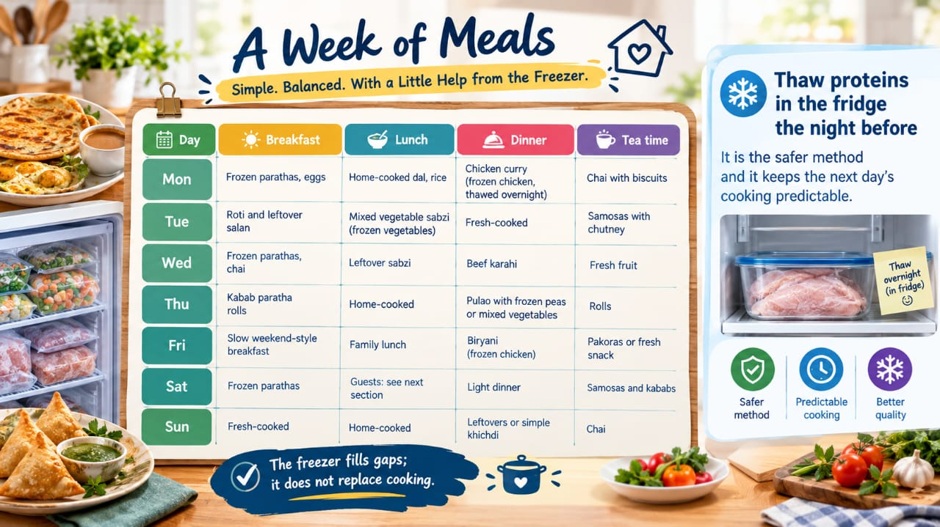
4. A Practical 7-Day Freezer Meal Planning Example
This is an example week for a family that cooks mostly at home. The freezer fills gaps; it does not replace cooking.
| Day | Breakfast | Lunch | Dinner | Tea time |
| Mon | Frozen parathas, eggs | Home-cooked dal, rice | Chicken curry (frozen chicken, thawed overnight) | Chai with biscuits |
| Tue | Roti and leftover salan | Mixed vegetable sabzi (frozen vegetables) | Fresh-cooked | Samosas with chutney |
| Wed | Frozen parathas, chai | Leftover sabzi | Beef karahi | Fresh fruit |
| Thu | Kabab paratha rolls | Home-cooked | Pulao with frozen peas or mixed vegetables | Rolls |
| Fri | Slow weekend-style breakfast | Family lunch | Biryani (frozen chicken) | Pakoras or fresh snack |
| Sat | Frozen parathas | Guests: see next section | Light dinner | Samosas and kababs |
| Sun | Fresh-cooked | Home-cooked | Leftovers or simple khichdi | Chai |
Notice what this does. On Tuesday, Wednesday, and Sunday, the freezer barely features. It is there for Monday’s rushed morning, Thursday’s quick dinner, and Saturday’s guests, not for every meal.
Thaw proteins in the fridge the night before rather than leaving them on the counter. It is the safer method and it keeps the next day’s cooking predictable.
5. What to Keep for Unexpected Guests
Guests arriving with an hour’s notice is a familiar situation. A small “guest shelf” turns panic into a simple plan.
A basic guest kit:
- One pack of samosas
- One pack of rolls or kababs
- One or two chutneys
- Bread or parathas for a quick option
A simple serving plan for four to six guests:
1. Start cooking the samosas and the rolls immediately. Prepare them according to the instructions provided on the pack.
2. During this time, boil water for making chai and arrange the chutneys.
3. Mix some variety by adding some sliced cucumbers, tomatoes or a fruit plate so that the table does not look fried-only.
4. Serve in small batches to ensure that each dish arrives warm.
This kit will be useful only if it remains a kit. Do not help yourself from the guests’ shelf because of your craving for snacks.
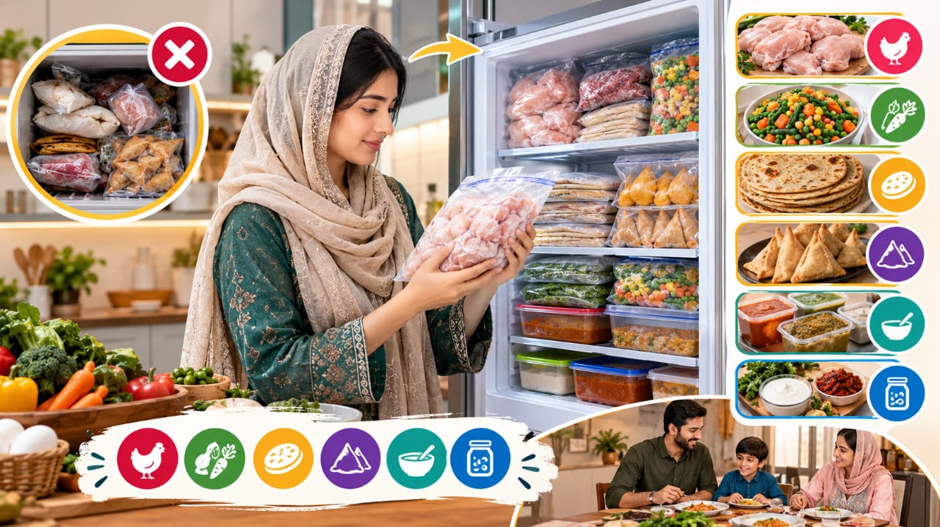
6. How to Organize Your Freezer Properly
A disorganized freezer costs money because food gets forgotten. A few habits fix most of it.
- Categorize. Allocate space for breakfast, proteins, vegetables, snacks, and accompaniments, placing them in separate baskets or bins, if available.
- Easy access for commonly used items. Items like parathas and other frequently used food products should never be placed behind a heavy bag of meat products.
- Label and date repackaged foods. Make sure to use marker pens and sticky tapes. Label the food items and the date when it was packed. Unlabeled leftover salan becomes a puzzle after three weeks.
- FIFO. Newer food packs are to be kept behind older packs.
- Avoid overcrowding. Allow space for air circulation and easy access.
- Use appropriate packaging. Freezer-safe bags or airtight containers prevent foods from freezer burn and absorption of any odors. Before sealing the bags, press out the air.
- Cut it up first. Once you divide one large package of meat into smaller portions, you will thaw only the required amount.
- Verify temperature. Food safety organizations such as USDA suggest keeping the freezer at or below -18 °C (0°F). An inexpensive freezer thermometer does the trick.
A note on power cuts. In case you live in regions where load shedding occurs quite often, do not open the freezer door too many times; there is no need to see if your food has thawed. It is known that a freezer which is half-filled will retain its temperature for a longer period of time than an empty one. If the food has thawed a little bit, refer to the recommendations regarding storing your product.
7. Common Freezer-Stocking Mistakes Pakistani Families Should Avoid
- Over-purchasing one particular thing. Ten bags of the same snack food is not an efficient way to organize your freezer.
- Failing to take into account family preferences. An item that no one in your family likes has no place in your freezer, regardless of convenience.
- Buying more than needed due to a discount. Discounts work when applied to foods that you would buy anyway.
- Overlooking older items. The back corner of your freezer is an easy place to forget about old intentions. Check at least once a month.
- Bad organizing skills. If you can’t see it, you won’t cook with it.
- Bad labeling skills. Repackaged food that doesn’t have a label or a date of repackaging is a guessing game.
- Oversizing your freezer. An overloaded freezer is inefficient both in organization and usage.
- Stocking for an imaginary family. Build for the routine you have, not the one you wish you had.
8. How to Build a Freezer Stock on a Budget
You don’t need to fill a freezer in one trip. Building gradually is easier on the budget and teaches you what your family actually uses.
- Start with the most-used items. For most households, that means parathas, one or two proteins, and a vegetable or two.
- Buy according to consumption. Track what runs out first and restock that.
- Plan before you shop. Make a short list for the week rather than buying on impulse.
- Avoid unnecessary bulk. Larger packs are only a good deal if you will finish them before they lose quality.
- Add in stages. Add one new category each shopping trip until the freezer is balanced.
- Separate essentials from extras. Everyday items get priority. Occasional snacks like samosas and rolls come second, kept in smaller quantities.
Prices change often, so compare current prices at the time you shop instead of relying on any fixed number.
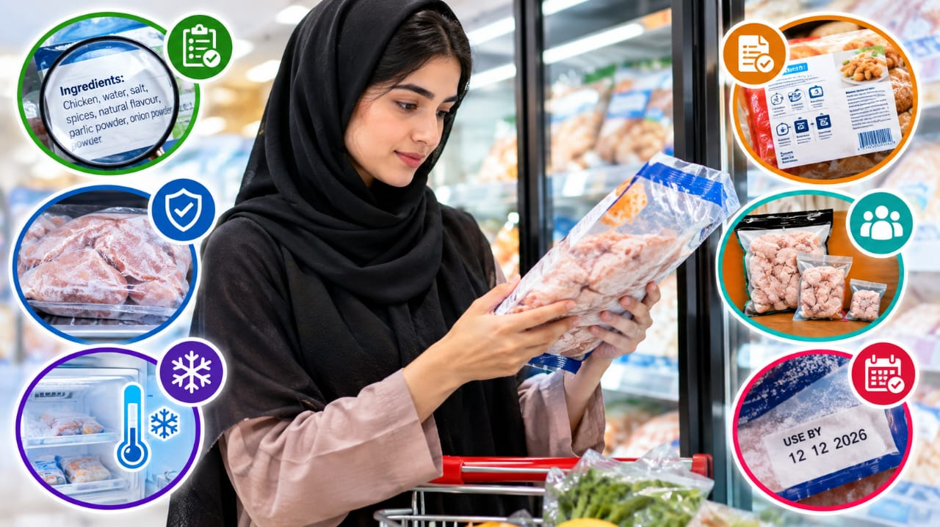
9. What to Look for When Buying Frozen Food
Only a few checks matter at the point of purchase:
• Ingredient information. Go through the ingredients and verify that it meets your expectations while serving your family members.
• Packaging quality. Select packages that are intact and not torn and not covered with heavy frost inside, which is an indication of improper handling.
• Storage environment. Products must have been stored appropriately frozen in their point of sale, and they must remain solid when you pick them.
• Product labeling. Look for clear names of products, storage requirements, and preparation directions.
• Proper portion size. Select package sizes that will help you serve your family members in one or two servings and not leave behind half used packages.
• Use by or expiry date. Always select products by looking at the date on them and using the older packs first.
10. How Ashraz Kitchen Can Fit Into a Pakistani Family’s Freezer Plan
If you’re building up your freezer inventory along the lines of those categories, then Ashraz Kitchen’s line can be mapped to those fairly easily. For families living in Lahore and elsewhere, the categories they provide cover the following:
• Chicken and beef for your protein section in the freezer
• Parathas for the breakfast section
• Vegetables for preparing your sabzi, pulao and sides
• Samosas and rolls for your tea time/guest section
• Chutneys for completing your snacks and paratha meals
How to go about any range like this? The process is the same as all the others discussed above: build your inventory by starting with what your family uses the most and then adding new categories gradually as your inventory runs out of something.
Conclusion
An adequate freezer inventory for the average Pakistani family has nothing to do with capacity. It is all about ensuring that you stock your freezer in accordance with the way your household functions: morning meals that do not require thirty minutes of preparation, proteins that will help you through the week, vegetables that cut down on the prep time, and a small guest inventory just in case.
Begin small, label everything, check out the inventory each month, and adapt to your household’s needs. In a matter of weeks, your freezer will cease being a storage place and become a useful tool.
FAQ Section
1. What are the essential foods to keep in the freezer for a Pakistani family?
Start with parathas, chicken, beef, a few frozen vegetables, samosas or rolls for snacks, and one or two chutneys. Adjust the mix to what your family actually eats.
2. How much frozen food should a family of four keep?
There is no fixed amount. Estimate by counting how many meals you want the freezer to cover each week, how many portions a typical pack gives, and how much space you have. The example framework in section 3 is a starting point.
3. What frozen items are useful for unexpected guests?
Samosas, rolls, and kababs, plus a chutney and some bread or parathas. Add something fresh like sliced cucumber or fruit to balance the plate.
4. How should I organize my freezer?
Group by category, keep everyday items in front, label and date everything you repackage, and use older items first. Avoid overfilling.
5. What temperature should a freezer be kept at?
Food-safety authorities such as the USDA recommend −18°C (0°F) or below. A freezer thermometer makes it easy to check.
6. What should I do with frozen food during a power cut?
Keep the door closed as much as possible. If food has thawed and stayed warm for a while, be cautious, and discard anything you are unsure about.
7. How do I avoid wasting frozen food?
Buy according to real consumption, label and date items, use older packs first, and review the freezer once a month.
Pingback: How to Cook Frozen Paratha So It Stays Soft and Flaky