
How to Cook Frozen Samosas: Crispy Results Without Breaking
Just a few frozen samosas are placed in the pan and in just a few minutes one of them breaks, oil becomes murky and all others are either too light in color or too greasy. It is an issue that many people face, but the reason behind it may not be only bad luck, it could be due to several actions.
So here is what should be done when frying frozen samosas in brief – follow the cooking instructions written on the packaging, give enough space in the pan for each samosa, keep the constant temperature in the pan, treat them gently, and drain well. Cooking time and temperature as well as thawing or not depends on several factors such as filling, wrapper, size, and samosa manufacturer. All the information can be found on the packaging. Some food safety guidelines that will be helpful when preparing chicken and beef filled samosas as well as information before using an air fryer or oven.
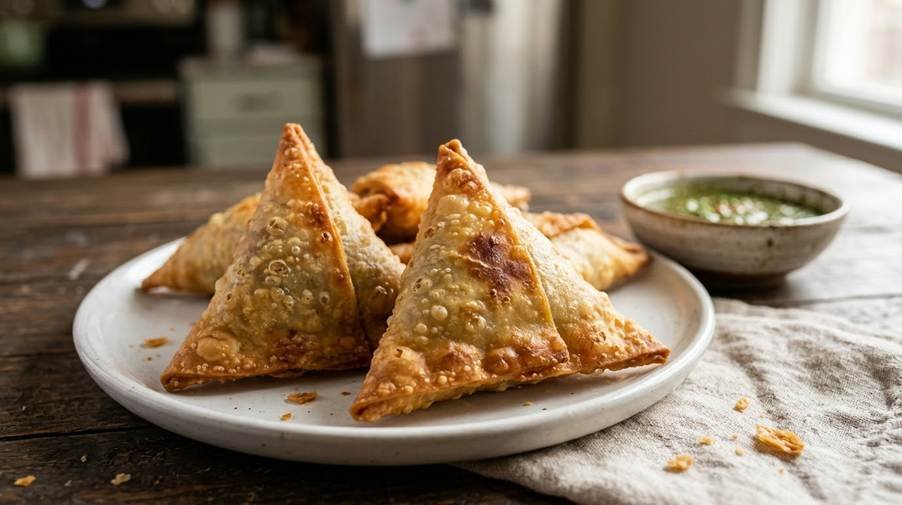
Can You Cook Samosas Straight From Frozen?
Some frozen samosas are designed to go straight from the freezer straight into hot oil. However, some frozen samosas have other cooking requirements, and some may even be partially or fully precooked. It is impossible to distinguish between different types based on the appearance of pastry; therefore, the only way is to refer to the label or to the supplier.
There are two factors that should be considered. The first one is that the fillings vary, and minced meat filling requires more time to cook than a potato one. The second one is that according to the food safety recommendations concerning poultry, a frozen product needs more time to cook than a refrigerated one. Do not thaw samosas unless it is specified in the instructions; however, any information online, including this article, is just a general recommendation and not an alternative to specific instructions.
If you are cooking Ashraz Kitchen samosas, please visit the product page where the cooking technique is stated. For timing or thawing questions, refer to the packing or contact the team on WhatsApp 03224173988.
How to Fry Frozen Samosas
This is always a wise thing to do. If your packaging recommends something else, then follow that.
1. Always read the instructions. Note whether there is need to thaw, cooking time, and anything regarding oil.
2. Pick up a heavy bottom pan or kadhai. There should be enough depth in the oil to allow movement of the samosas without being stuck on the bottom of the pan.
3. Hold the temperature consistently. You could use a frying thermometer, but if not available, check to see that there is consistent bubbling in the oil and not violent spluttering or little spluttering.
4. Knock off any loose frost from the samosas and drop into the oil slowly. Always use a slotted spoon and keep at a safe distance when dropping. Frozen food causes hot oil to splash.
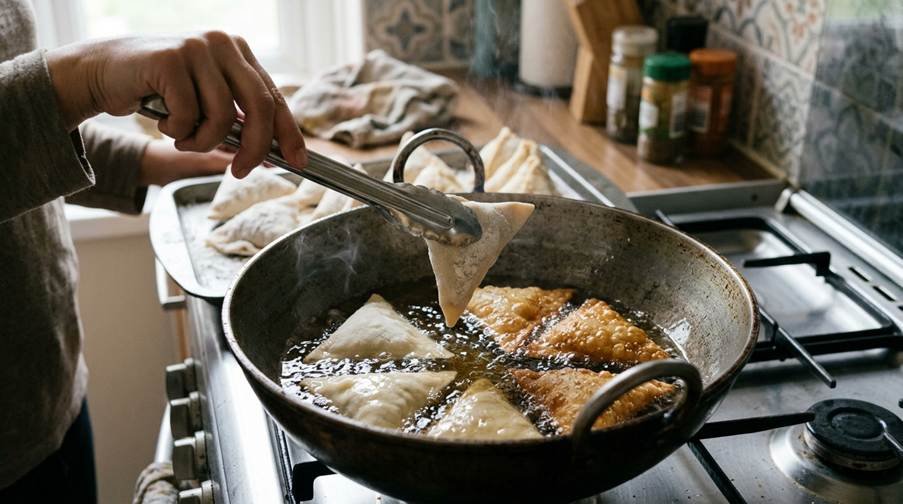
5. Do not touch the samosas in the initial stages until the crust is set, after which you should turn carefully.
6. Cook the samosas to the recommended time on the pack and not just on color.
7. Drain on a wire rack or paper-lined plate.
Food safety when using meat fillings. According to the USDA, all kinds of poultry should be cooked to 165°F (74°C) using a food thermometer, while the temperature for ground meats is 160°F (71°C). A golden color does not mean that the filling is completely cooked since USDA food safety department has warned that even the browned breaded frozen chicken products may contain raw chicken. Since the cooking time depends on the cooking technique and on the initial state of the product (whether it was frozen or chilled), test the filling in a test samosa using a thermometer.
How to Get Crispy Samosas Without Breaking the Wrapper
- Give them space. Too many at once lowers the oil’s temperature, so the wrappers soak up oil instead of crisping. Overcrowded samosas are likely to bump into each other and fall apart.
- Ensure even heating. Oil that is too hot will brown the wrapper before the filling becomes warm. Oil that is too cool will leave it greasy and pale. It is advisable to allow time for recovery between batches.
- Treat them carefully. Rather than shaking out the samosas, lift each one of them by the body.
- Drain instead of stacking. Stacking hot samosas results in a softened crust because of steam trapped.
Common Mistakes to Avoid
• Using a timer for every samosa filling. The aloo samosa and the meat samosa will not always take the same amount of time to cook.
• Reuse old oil. Oily food becomes tainted with the smell of old oil and will become too dark.
• Keeping the packet open. Re-seal the packet to prevent extra moisture in the form of frost which will cause spitting when frying.
• Cooking an entire batch in one go. Fry in batches and serve each batch hot from the pan.
Can You Cook Frozen Samosas in an Air Fryer or Oven?
Only if it is mentioned in the pack. Samosas differ in terms of wrapper thickness and filling types, and conditions that will be favorable for one may be unfavorable for the other. In case your pack provides you with the recommended temperature and cooking time for air fryer and oven cooking, follow those recommendations precisely. Otherwise, don’t expect the same results as in case of deep-frying; and use a thermometer in case of chicken and beef fillings.
Cooking in the microwave is not a good option in the case of raw frozen poultry products. According to USDA experts, it is better not to use this method unless you get specific recommendations on how to check the correct temperature from the pack. On the pages of Ashraz Kitchen, samosas are described as deep fried only.
How to Serve Frozen Samosas
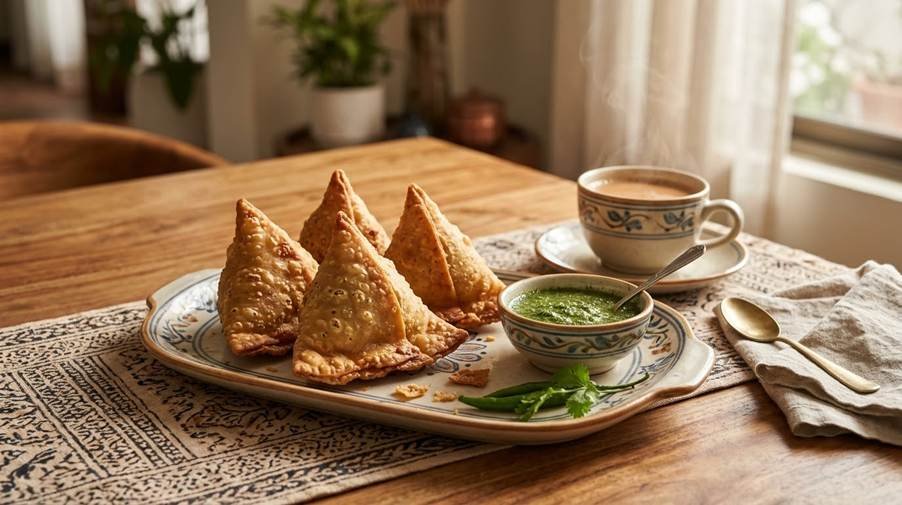
Samosas should be eaten hot in batches instead of keeping them in large quantities to serve later. A good idea is to have a simple snack party with samosas served with two kinds of chutneys, for example, mint coriander and imli (tamarind), along with yogurt dip and chai in a teapot.For more spread ideas, see this guide to frozen snacks for tea time and parties.
Where to Buy Frozen Samosas in Lahore
Ashraz Kitchen lists its samosas in the Frozen Rolls & Samosa category. Options include a 12-piece pack listed with aloo, chicken and beef samosas and a 13-piece frozen chicken samosa pack. Malai boti and macaroni samosas are also listed in the same category.
Delivery is available in Lahore only, and orders above Rs 5,000 qualify for free delivery. Check the product page for current availability before ordering.
Frequently Asked Questions
Q1: Should frozen samosas be thawed before frying?
Answer: No, you should generally fry frozen samosas directly from the freezer without thawing. Thawing can make the dough soft and sticky, causing the wrapper to tear or absorb too much oil. Always follow specific packaging guidelines if provided.
Q2: How do I fry frozen samosas without breaking them?
Answer: To prevent breaking, drop samosas gently into hot oil, avoid overcrowding the pan, and do not stir or flip them for the first 1–2 minutes until the outer crust has set.
Q3: What is the ideal oil temperature for frying frozen samosas?
Answer: The best temperature for deep-frying frozen samosas is between 160°C to 175°C (320°F to 350°F). Oil that is too hot will brown the wrapper while leaving the inside raw, while cool oil will make them greasy.
Q4: How long does it take to fry frozen chicken and beef samosas?
Answer: Frozen meat-filled samosas (chicken or beef) typically take 6 to 8 minutes on medium heat to ensure the inner filling reaches a safe temperature of 74°C (165°F).
Q5: Can I cook frozen samosas in an air fryer?
Answer: Yes, you can air-fry frozen samosas at 180°C (350°F) for 12 to 15 minutes. Lightly brush or spray them with oil and flip halfway through for an even, golden crust.
Q6: How do you keep samosas crispy after frying?
Answer: Place freshly fried samosas on a wire cooling rack instead of paper towels or a covered container. Trapped steam makes the crust soft, whereas airflow keeps it crunchy.
Q7: Why do my frozen samosas absorb too much oil and get greasy?
Answer: Samosas absorb excessive oil if the oil temperature drops too low (often caused by overloading the pan) or if the samosas were thawed prior to cooking.
Q8: How should homemade frozen samosas be stored to prevent sticking?
Answer: Freeze samosas in a single layer on a tray first. Once completely solid, transfer them into a ziplock bag or airtight container so they do not stick together.
Q9: Can frozen samosas be baked in a standard oven?
Answer: Yes, preheat your oven to 200°C (400°F), arrange the frozen samosas on a baking sheet, brush with a thin layer of oil, and bake for 15 to 20 minutes until golden brown.
Q10: How do I safely test if meat samosas are fully cooked inside?
Answer: Use a digital meat thermometer inserted into the thickest part of the filling. Chicken samosas should reach at least 74°C (165°F), while ground beef samosas require 71°C (160°F).